Home Improvements in Aberdeen, A Homeowner's Guide for 2026
If you own a home in Aberdeen or Aberdeenshire and you’re thinking about improving it, this guide is for you. Not a sales pitch. Not a shopping list. A straight-talking walkthrough of what “home improvements” actually means in this part of Scotland, the work that adds real value, the work that doesn’t, the rules you can’t ignore, the order to do things in, and how to pick a builder who won’t leave you with a half-finished house and a full bank account.
I’ve spent 20+ years in the trade in the North-East of Scotland. Everything below is based on jobs we actually run, granite tenements on Union Grove, harled semis in Westhill, bungalows in Portlethen, farmhouses out towards Ellon. If your first thought about home improvements was “I don’t know where to start”, that’s exactly the right thought. This guide fixes that.
Contents
- What “home improvements” actually means
- The five categories every Aberdeen homeowner picks from
- Which improvements return your money
- The order to do things in
- Aberdeen-specific things that catch people out
- Planning, warrants, and the Scottish rules
- Budgeting: what things cost in 2026
- Timelines: how long each type of job actually takes
- How to pick a builder (without regretting it)
- Living in your home during the work
- Common mistakes we still see every year
- Frequently asked questions
What “home improvements” actually means
“Home improvements” is a huge umbrella. Everyone means something slightly different by it. Before you spend a penny, it’s worth being clear which of these you’re actually trying to do:
- Repair, fixing what’s broken (roof, damp, boiler, windows, wiring). Not really an “improvement”, but it usually has to come first, and it uses the same trades.
- Refurbishment, replacing tired but functional things with better versions (new kitchen, new bathroom, redecoration, new flooring, new heating). The house doesn’t get bigger, it gets better.
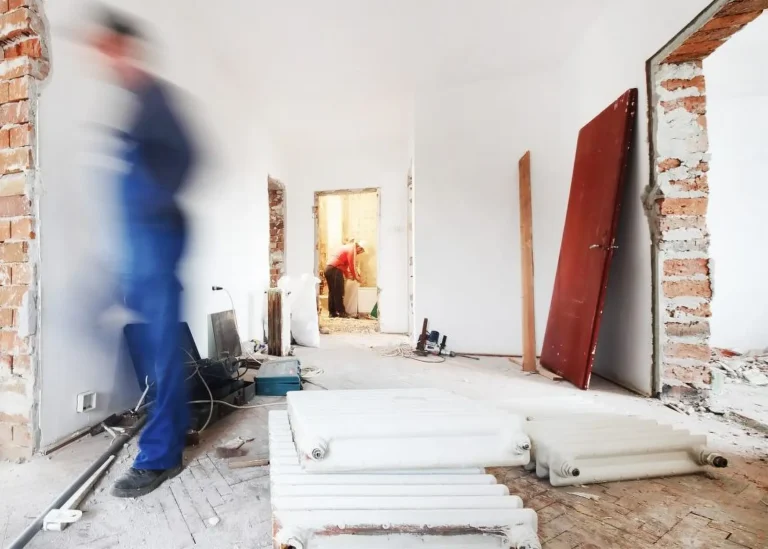
- Renovation, bringing a run-down or dated house back to a high modern standard. Usually involves several rooms at once, sometimes with structural changes.
- Extension, making the house physically bigger by adding rooms.
- Conversion, turning existing space into new living space (loft, garage, integral store).
- Energy retrofit, insulation, glazing, heating system, air tightness, solar. Improves comfort and running costs, not floor area.
Most of the “home improvements Aberdeen” briefs we quote are a mix of refurbishment and renovation, a family who bought a 1970s semi and want to modernise it, or a couple who’ve lived in a granite terrace for 20 years and are finally doing the whole ground floor properly. If you know which of the six labels above best fits your project, every other decision gets easier.
If you’re specifically after a bigger house, our sister post Home Extension Cost by Type in Aberdeen covers extensions in depth.
The five categories every Aberdeen homeowner picks from
In practice, almost every improvement you’ll commission falls into one of five buckets. It helps to think of your project as a combination of these rather than one giant blur.
1. Kitchen work
The single most common improvement in Aberdeenshire homes. Ranges from a “new kitchen in the same layout” swap (£12,000 to £20,000 for a decent mid-range fit) up to a full kitchen extension with structural steel and bifold doors (£55,000+).
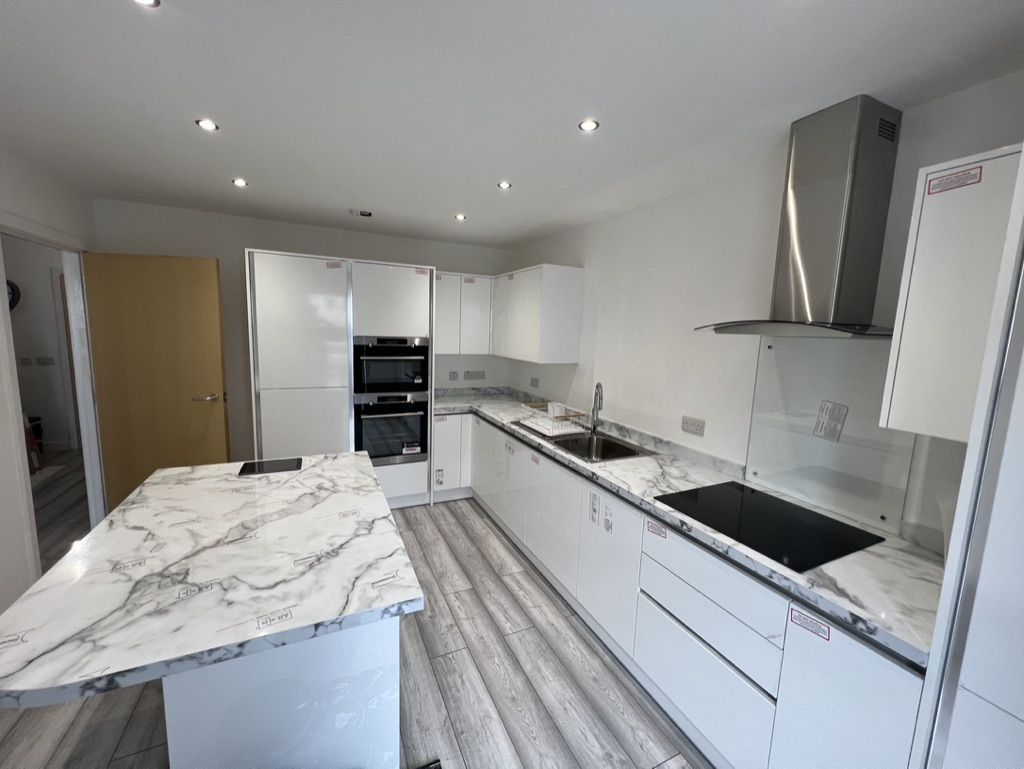 Kitchen renovation we finished in Bridge of Don, handleless white
cabinetry with a marble-effect waterfall island.
Kitchen renovation we finished in Bridge of Don, handleless white
cabinetry with a marble-effect waterfall island.
Kitchens are where homeowners get the biggest daily-life uplift. They’re also where most budget over-runs happen, because scope creep is easy, you start with “just new units” and end up moving a wall, upgrading the electrics, and putting in underfloor heating. See our costs guide at Kitchen Cost Aberdeen for realistic 2026 numbers.
2. Bathroom work
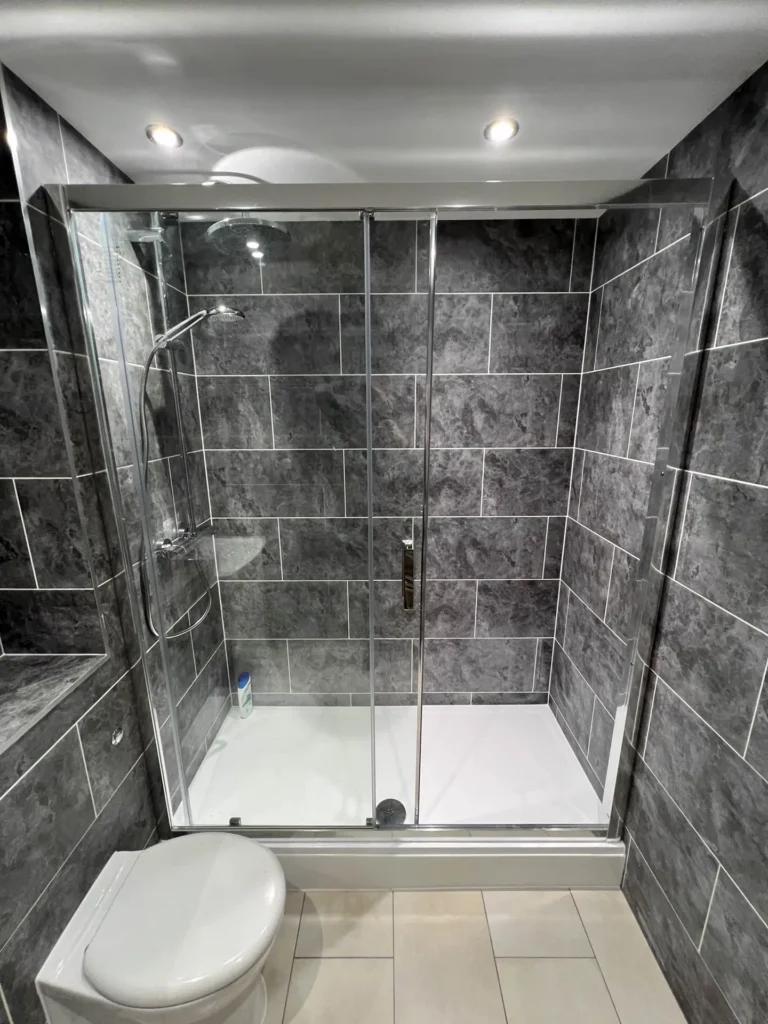
Second most common. Aberdeen has a lot of granite tenements and 1970s semis with tired bathrooms, often a small dated suite plus a separate WC. Modern improvements usually combine the two into one bigger room, add a walk-in shower, and lay stone-effect porcelain tiles.
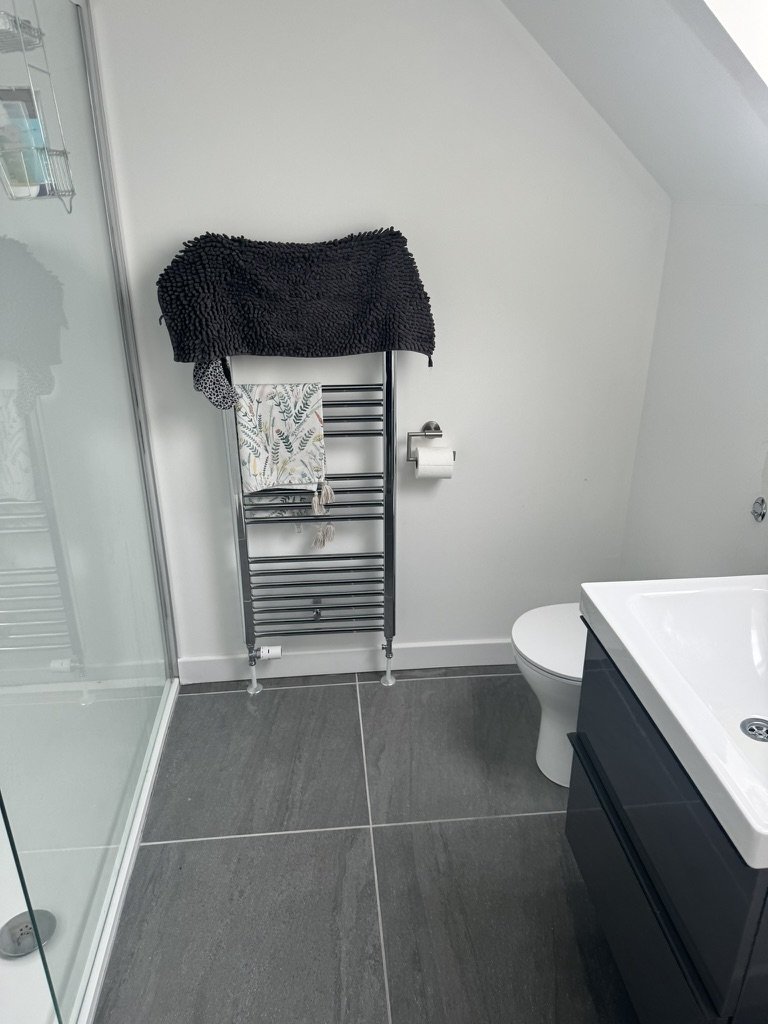 Family bathroom renovation in Portlethen, heated towel rail, tiled
floor, freestanding bath, wall-hung WC.
Family bathroom renovation in Portlethen, heated towel rail, tiled
floor, freestanding bath, wall-hung WC.
A mid-range bathroom refurbishment in Aberdeen is typically £8,000 to £15,000 all-in; higher-end wet rooms and ensuites go to £18,000 to £25,000. Detail at Bathroom Cost Aberdeen.
3. Space reconfiguration (walls, layout, structure)
The improvement most people underestimate. Removing a wall between the kitchen and dining room, opening up a hallway, moving a staircase, knocking a bedroom into a bigger ensuite, these are all “home improvements” and they change how a house feels far more than a new kitchen does.
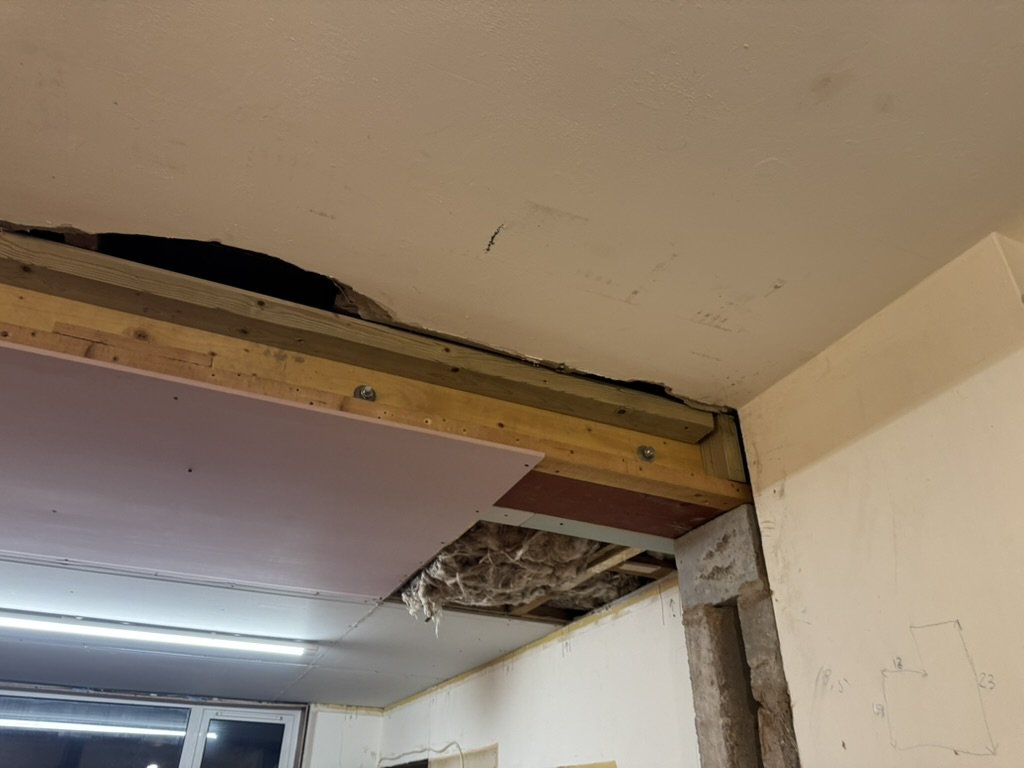 Structural steel beam supporting the first floor after we removed a
load-bearing wall on an Aberdeen renovation.
Structural steel beam supporting the first floor after we removed a
load-bearing wall on an Aberdeen renovation.
These jobs need a structural engineer’s calcs and a building warrant (see below), you can’t just take a wall out, no matter what the video on TikTok showed. But they’re often the single most transformative thing you can spend money on. Learn more at our Structural Steel Beams Aberdeen page.
4. Whole-room and whole-house renovations
Full renovation of a room or the whole ground floor, new floors, new plaster, new ceilings, new lighting, new decoration, sometimes new joinery like alcove shelving and window seats. Not glamorous individually, but the sum of all of them is what makes a house feel new.
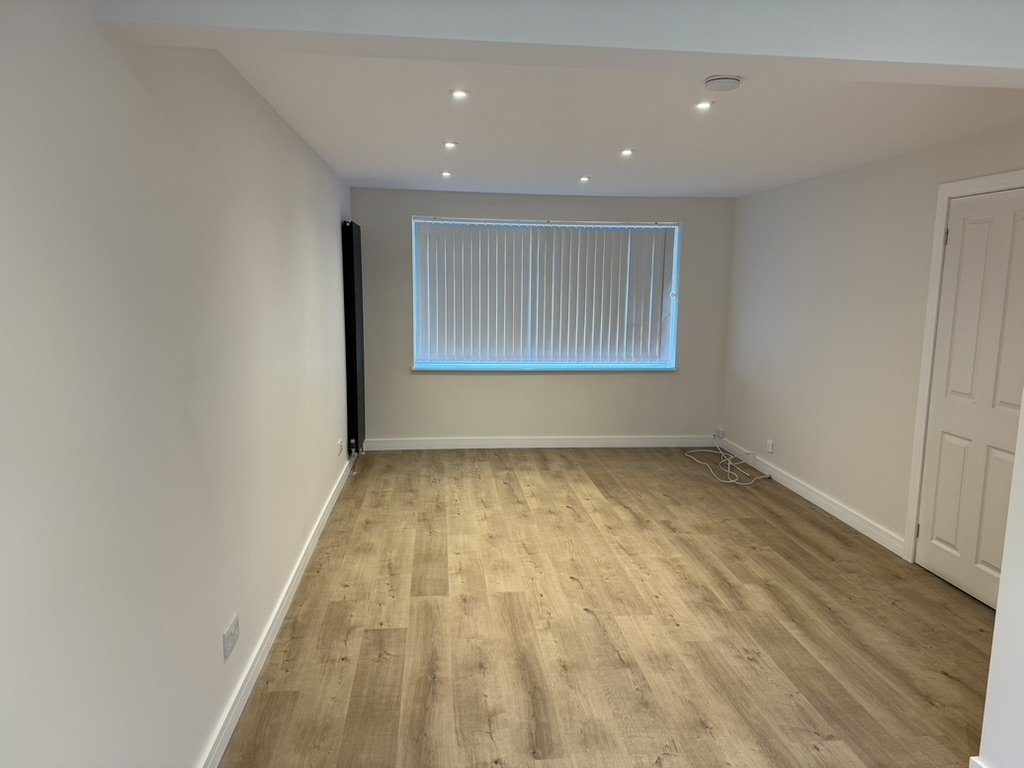 Living room ready for handover after a full renovation in Bridge of
Don, replastered, new flooring, new electrics.
Living room ready for handover after a full renovation in Bridge of
Don, replastered, new flooring, new electrics.
Whole-house renovations of a 3-bed Aberdeen semi typically fall in the £65,000 to £140,000 range depending on scope and finish. If the property needs rewiring, replumbing, insulation upgrades and new windows on top, the number rises quickly.
5. External and structural work
Roofs, chimneys, granite repointing, harl repair, driveways, patios, garden walls, external insulation, new fenestration. Less glamorous but often the difference between a house that lasts and a house that costs you twice.
Granite properties in particular need specific care, see our Granite Repair and Repointing Aberdeen page for what we do on tenements and traditional Aberdeen builds.
Which improvements return your money
Some improvements add hard resale value. Some add lifestyle value. A few add both. Others don’t move the sale price at all. If part of your motivation is future sale, keep this in mind:
Improvements that pay back well in Aberdeen:
- A new kitchen, the single strongest visual driver in a viewing. Even a mid-range kitchen refresh (£15,000) is often visible in the asking price.
- A modern family bathroom, the same story, especially for family buyers.
- A loft conversion with a proper ensuite, adds bedroom count, which is the single biggest driver of house value in the North-East. See Does a Loft Conversion Add Value? for detail.
- Sensibly-scoped extensions, an extra bedroom or a larger open-plan kitchen-diner. Over-extending a modest house rarely pays back; matching-scale extensions usually do.
- Energy efficiency upgrades in older stock, new glazing, insulation, modern heating. Buyers are increasingly EPC-aware.
Improvements that add lifestyle but not much resale in Aberdeen:
- Bespoke home offices, garden rooms, cinema rooms, great to live with, rarely reflected pound-for-pound in resale.
- Very high-end finishes in mid-range areas, you can spend £45,000 on a kitchen in a £250,000 house and get back £10,000 at sale.
- Over-specified landscaping, matters for lifestyle, less for price.
Improvements that are usually a bad idea if you’re selling within 2 years:
- Removing a bedroom to make a bigger master, you almost always lose value.
- Very personal design choices (extreme colour palettes, unusual layouts), narrow the buyer pool.
- Non-standard heating systems without a strong energy case, can put buyers off if unfamiliar.
If you’re likely to move within 3-5 years, weight your spending toward the first list. If you’re staying long-term, spend on the lifestyle stuff, you’re the one living with it.
The order to do things in
Most botched projects we’re called in to rescue have one thing in common: the order was wrong. Here’s the sequence we run on serious Aberdeen renovations:
- Survey, brief, and design first. Before quotes, before deposits. What are you actually trying to do, and what’s the property already telling you? Damp survey if it’s a granite building. Boiler / electrical condition check if the house is over 25 years old.
- Structural changes and steels. Any walls coming out, openings widened, steels going in. This dictates the whole floor plan.
- First fix electrics, plumbing, gas, and any pipework. Cheap and easy while walls are open, expensive and destructive later.
- Insulation and airtightness. Same reason. Do it while things are open.
- Plasterboard, plaster, screed. The dust-heavy phase.
- Windows, doors, staircases. Second fix carpentry.
- Kitchens and bathrooms. These need to go in after plaster and before floors.
- Flooring and painting. Toward the end. Painting is genuinely last.
- Snagging and handover.
Rebuilding a room in the wrong order, for example, tiling before the electrician runs the switch drop, or laying flooring before the kitchen goes in, leads to double-work, damage, and cost blow-outs. If a builder tells you they can start next week without a design brief and a fixed price, that’s a red flag.
Aberdeen-specific things that catch people out
Aberdeen is not London and not Edinburgh, the rules, the stock, and the trades market are all different. Things we watch out for on every job:
Granite is unforgiving. Traditional granite construction has no cavity, hardly any insulation, and doesn’t tolerate hard cementitious pointing or sand-cement render. We use lime-based products on all our repointing and repairs. Getting this wrong can cause damp for years.
Weather compresses external work. External work in Aberdeen realistically runs from April to October, outside that window, a wet or freezing day loses productivity. Plan external repairs, harl and roof work for the drier months.
Trades book up months ahead. Good electricians, plumbers, joiners and plasterers around Aberdeen are booked 8 to 14 weeks out. Anyone who’s available immediately in peak season is either new or has been let go by other builders, worth a careful check either way.
Building Standards is stricter here than a lot of England. Scotland’s Building Standards system is more prescriptive than England’s Building Regulations for the same job. See the Scottish Government Building Standards guidance for the official position.
Amendment 4 of BS 7671 is mandatory from October 2026. All new domestic electrical installations must comply. If you’re rewiring or having any significant electrical work as part of your improvement, ask your electrician whether they’re already working to Amendment 4, the answer should be yes.
Snow, cold, and 8-hour winter daylight matter. Roof work, harl and external decoration are seasonal; internal work happens all year. Schedule accordingly.
Planning, warrants, and the Scottish rules
If you’re used to English rules, wipe them from your head. Scotland has two separate approvals and neither is optional when required:
- Planning permission, whether the work is allowed in principle (external appearance, scale, use). Applications go through your local council’s planning portal. Aberdeen City: Aberdeen City Council planning. Aberdeenshire: Aberdeenshire Council planning. Guidance at mygov.scot planning permission.
- Building warrant, the technical building-standards approval. Confirms the construction complies with structural, fire, energy and safety rules. Required for most structural work, extensions and conversions. Details at mygov.scot building standards.
Rules of thumb:
- Internal decoration and swapping like-for-like kitchens or bathrooms, usually no warrant.
- Moving or removing walls, adding new drainage, adding structural steel, altering the roof, warrant required.
- Extensions and outbuildings, planning and warrant, unless within very tight permitted-development limits. See our Permitted Development Scotland Guide.
- Loft conversions, warrant required, planning often required, and specific rules about escape windows, stairs and fire separation. See Loft Conversion Planning Permission Aberdeen.
If your builder says “we don’t bother with warrants for something like this”, get another builder. Working without a required warrant creates real problems when you sell the house.
Budgeting: what things cost in 2026
Realistic Aberdeen numbers for common projects, based on jobs we’re quoting in 2026. These are indicative starting points, every property differs.
| Project | Realistic 2026 starting price | Where budgets grow |
|---|---|---|
| Kitchen refresh (same layout) | £12,000 | Cabinetry brand, worktop stone, appliance spec |
| Full kitchen replacement + walls out | £22,000 | Structural steel, new floor, rewire, plaster |
| Kitchen extension (single-storey + fit-out) | £55,000 | Size, glazing spec, bifold/lantern, finish level |
| Family bathroom refurbishment | £8,000 | Layout change, tile spec, brassware, heating |
| Ensuite conversion (loft or bedroom) | £6,500 | Drainage runs, extraction, glass shower spec |
| Wet room | £11,000 | Waterproofing spec, drainage, tanking |
| Whole ground floor renovation | £45,000 | Structural changes, floor level, kitchen inclusion |
| Full 3-bed semi renovation | £85,000 | Rewire, replumb, roof, windows, insulation |
| Loft conversion (with ensuite) | £48,000 | Dormer/Velux, staircase, span, insulation |
| Garage conversion (habitable room) | £22,000 | Insulation, drainage, heating tie-in |
| Structural opening (single steel) | £4,500 | Beam span, load path, floor make-good |
| Roof repointing / repair | £3,500 | Access, scaffold, tile match, chimney work |
| Full harl / render | £9,000 | Access, condition of substrate, lime vs cement |
| Repointing granite (per m²) | £180 to £280 | Joint width, height, ornamental detail |
Whole-house guide numbers are always dominated by three items: structural steel, kitchen, bathrooms. If you can get those three right on the brief, the rest of the budget is manageable.
Detailed breakdowns per project:
- Home Extension Cost Aberdeen
- Kitchen Cost Aberdeen
- Bathroom Cost Aberdeen
- Loft Conversion Cost Aberdeen
- Garage Conversion Cost Aberdeen
- Garden Room Cost Aberdeen
Timelines: how long each type of job actually takes
Ask ten builders and you’ll get ten different answers. These are our honest numbers, based on real recent jobs, not marketing gloss.
- Design and warrant phase (structural work): 6 to 12 weeks before builders start.
- Kitchen refresh (same layout): 3 to 4 weeks on site.
- Kitchen replacement with wall out and rewire: 7 to 10 weeks on site.
- Family bathroom refurb: 2 to 3 weeks on site.
- Ensuite conversion: 3 to 5 weeks on site.
- Single-storey rear extension: 12 to 16 weeks on site.
- Wraparound extension: 14 to 18 weeks on site.
- Loft conversion: 10 to 14 weeks on site.
- Garage conversion: 6 to 10 weeks on site.
- Whole 3-bed renovation: 16 to 24 weeks on site.
A useful rule: most projects take 25 to 40% longer than the homeowner initially expects, mostly because the design and warrant phase gets telescoped in memory. Building the design phase into your mental timeline early is what turns “we’re 6 weeks late” into “we’re on schedule”.
How to pick a builder (without regretting it)
Picking the right builder is worth more than every design choice combined. Here’s what we’d tell a family member:
Ask to see three finished jobs of the same type. Not three “similar” jobs. Three of the same type. A builder who’s done twelve kitchen extensions is a different animal to one who’s done twelve loft conversions.
Ask to speak to at least two past clients. Reputable builders have clients happy to answer 10 minutes of questions. If the builder is reluctant, ask why.
Check they’re TrustMark approved for domestic work. TrustMark is government-endorsed and is the mark to look for in Scotland for domestic building work. Verify at TrustMark.
Check they’re a real company. Companies House takes 20 seconds. Sole traders can be excellent too, but you need to know what you’re contracting with, and whether they carry public liability and works-in-progress insurance.
Ask what happens if the price changes. No brief survives contact with the building. A good builder will explain variation orders, the process for pricing extra work, sign-off, and how it hits the total. A bad builder will say “we’ll sort it at the end”. Never let anyone sort it at the end.
Ask about their programme. Not “when can you start?” but “how do you sequence the trades?” A builder who answers with a rough week-by-week schedule is a builder who’s actually run projects.
Get everything in writing. Scope, allowances, exclusions, payment stages, defects period, warranty. If it’s not written down, it doesn’t exist.
For a fuller checklist, see How to Choose a Builder in Aberdeen.
Living in your home during the work
Whether to move out is one of the hardest calls on any big project. Our honest guidance:
You can usually live in during:
- Any single-room refurb (kitchen, bathroom, one bedroom).
- Extensions where the old wall doesn’t come down until late in the programme.
- Loft conversions, access is via a temporary staircase from the top floor.
- Garage conversions, access is external.
You should seriously consider moving out for:
- Whole ground floor renovations that include the kitchen and bathroom simultaneously.
- Full house renovations involving replaster, rewire, replumb.
- Structural work over multiple weeks where dust protection isn’t feasible.
The two hidden costs of “staying in” are your builder’s productivity (they’re slower when clients are in the house) and your family’s stress levels. Both are real. For a 12-week job, a short-term let across town is often a better investment than an extra £5,000 of finish.
Our Home Extension Timeline Aberdeen post walks through what living-through-it actually looks like week by week.
Common mistakes we still see every year
After 20+ years of running jobs in and around Aberdeen, the same handful of mistakes cost homeowners the most money:
1. Starting on site without a fixed design. “We’ll figure it out as we go” is the single most expensive sentence in construction. Every unresolved decision at the start becomes a variation cost mid-build.
2. Picking on price alone. The cheapest quote is nearly always missing something. Compare quotes line-by-line, not on total. If quote A includes a rewire and quote B doesn’t mention it, the difference is not a saving.
3. Not budgeting for the finish. Homeowners often price the build accurately then run out of money at the end for the tiles, the flooring, the paint, the lighting, the appliances. Put a finish budget of 15 to 25% of build cost on top of your build number. Then double-check it.
4. Skipping the survey. A pre-purchase or pre-project structural survey is £600 to £1,200. Not doing one has cost families £30,000 to £50,000 when hidden problems (subsidence, rotten timbers, non-compliant electrics) surface halfway through.
5. Ignoring the utilities. Old boilers, old fuse boxes, old lead water pipes, old drainage. If any are ready for replacement, do them before you renovate around them, not after.
6. Trusting verbal quotes. Nothing verbal binds anyone. If a builder gives you a verbal number, ask for it in writing. If they won’t put it in writing, walk.
7. Assuming permitted development covers it. Scotland’s permitted development rules are narrower than a lot of homeowners assume, especially for extensions on non-detached properties. Always confirm before you spend money on drawings.
Frequently asked questions
Do I need a building warrant to knock a wall out? If the wall is load-bearing, yes, always. Even if a builder tells you otherwise. If it’s a non-load-bearing stud wall, usually no, but confirm with the council. See mygov.scot building standards.
How much of my budget should be contingency? For a straightforward refurb, 10%. For a renovation with structural work, 15%. For a whole-house renovation, 20%. If your builder tells you no contingency is needed, they’re wrong.
Can I project-manage the work myself and save money? Sometimes, if you have building experience or a very simple scope. On complex projects, the money you’d save on a main contractor’s margin (typically 12 to 20%) gets spent on your own time and mistakes. Be honest with yourself about your bandwidth.
Will home improvements affect my council tax or house insurance? Insurance, yes, almost always. Tell your insurer before the job starts; some policies require notice for works over a certain value. Council tax, only if you’re increasing the number of bands (rare for improvements, more common for full new-build or significant conversions).
What’s the difference between renovation and refurbishment? Refurbishment is usually cosmetic: new units, new tiles, new paint. Renovation goes deeper, structure, services, layout. There’s plenty of overlap. In practice we quote by scope, not by label.
Do you cover my area? We work across Aberdeen city and Aberdeenshire, the pages under Service Areas list every town we regularly work in.
How quickly can you start? Realistically 8 to 14 weeks from first enquiry to first day on site, the design, quote, warrant (if needed) and material ordering process takes that long done properly. Anyone promising sooner is either between jobs or cutting corners.
The bottom line
The best home improvements in Aberdeen are the ones you plan properly, sequence correctly, and pay for once. There are no shortcuts, but there also isn’t much mystery, it’s a straightforward discipline of design first, structure second, services third, finish last.
If you’d like us to look over your home and give you an honest brief before you spend anything, we’re happy to do it. There’s no cost for that conversation. Full detail on our end-to-end service is at Home Renovations Aberdeen.
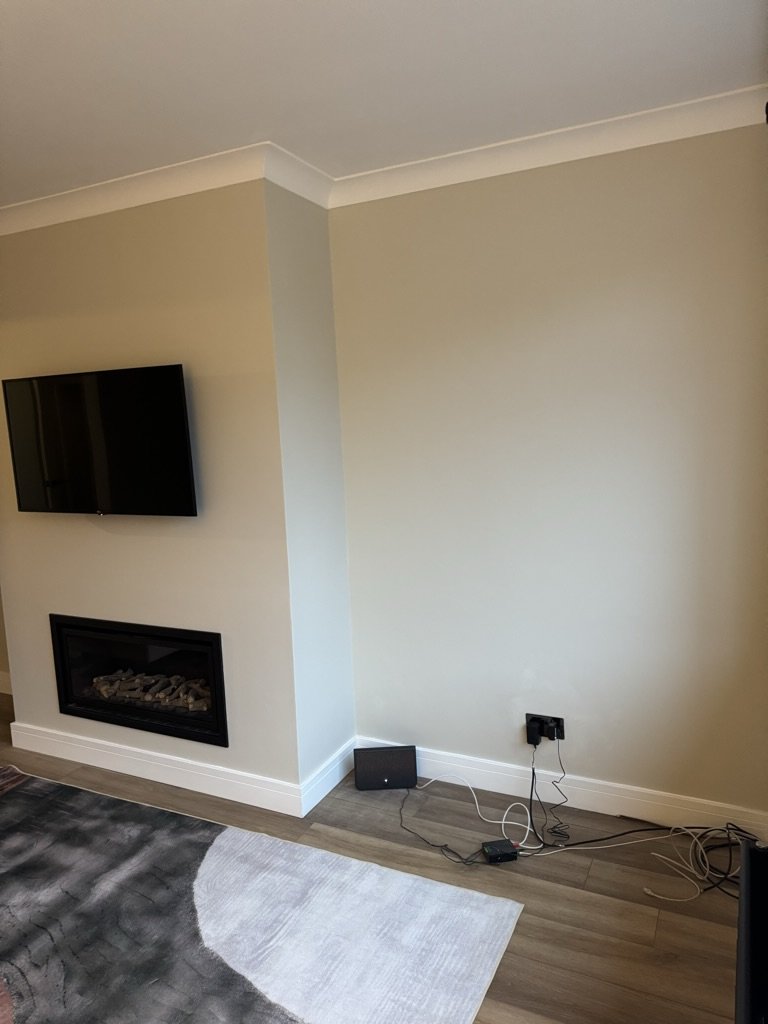 Finished living room from a Dyce renovation, wall-mounted TV, inset
gas fire, engineered wood floor. The details, chimney breast recess,
skirting, cable drops, all planned before first fix.
Finished living room from a Dyce renovation, wall-mounted TV, inset
gas fire, engineered wood floor. The details, chimney breast recess,
skirting, cable drops, all planned before first fix.
Whatever you’re improving, kitchen, bathroom, a whole floor, or the whole house, the golden rule stays the same: plan more than you think you need to, budget for what you can’t see, and pick people who’ve done the exact type of job you want.
About the author
Przemek Dunajski is the Founder of Granite Builders, an Aberdeen-based building contractor specialising in home renovations, kitchens, bathrooms, loft and garage conversions, and full home extensions across Aberdeen and Aberdeenshire. Przemek has 20+ years’ hands-on experience in the trade and is TrustMark approved.
Granite Builders Cirrus Building, ABZ Business Park 6 International Ave, Aberdeen AB21 0BH Phone: 07946 046935 Web: granitebuilders.co.uk
Thinking about your own project in Aberdeen?
Granite Builders is a family-run, TrustMark registered firm with over 20 years in Aberdeen and Aberdeenshire. Tell us what you have in mind and we will give you an honest, detailed written quote, with no obligation.